What is Polycystic Kidney Disease?
It’s no fun, I can tell you that much
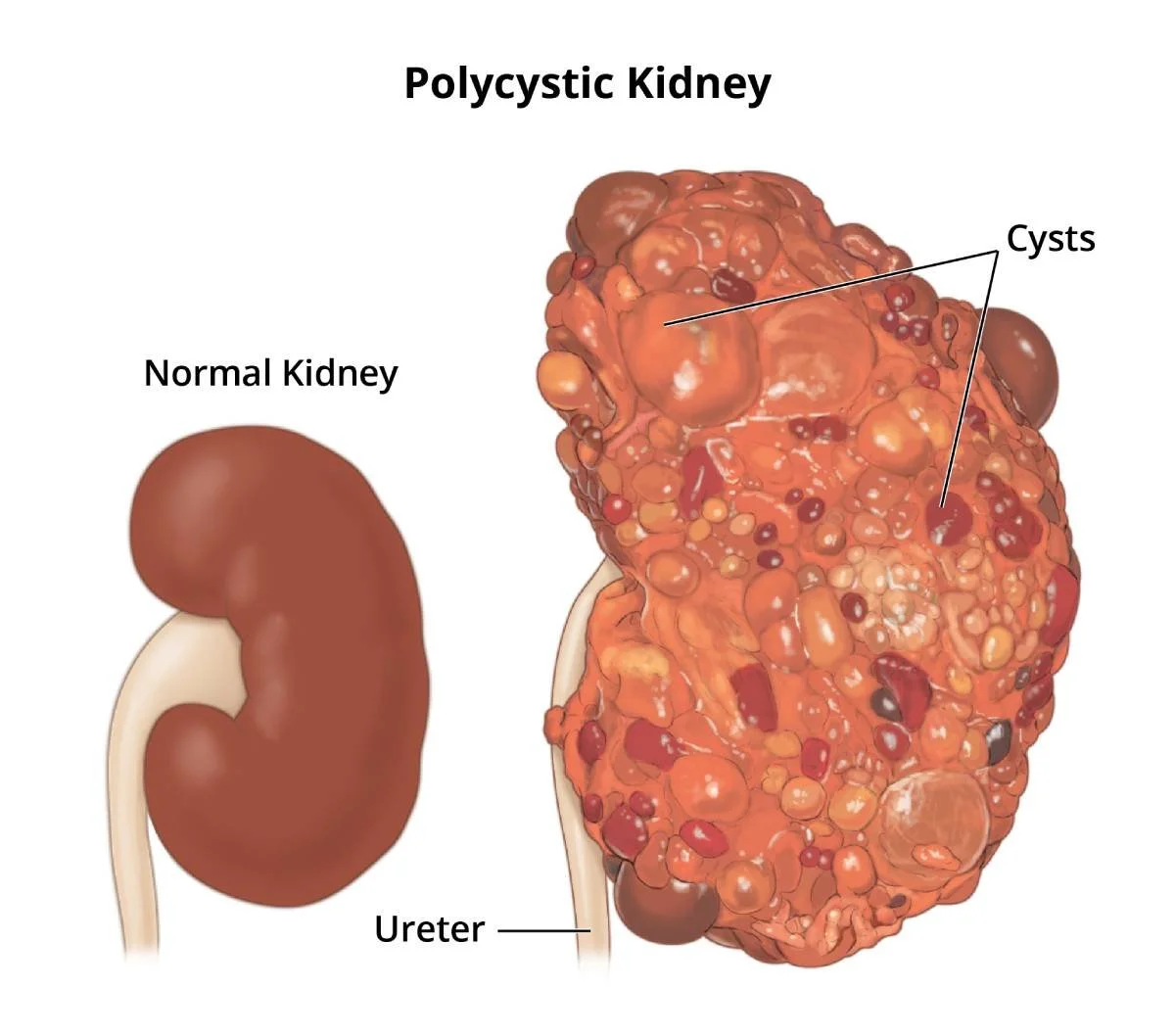
Polycystic Kidney Disease (PKD) is a genetic kidney disorder where a patient has a genetic mutation that causes cysts to grow uncontrollably on the kidneys. Over time, these cysts expand and multiply and slowly reduce your kidney function. Eventually, the cysts degrade your kidney function so much that you enter what is called end stage renal disease (ESRD), which is a technical term for saying that your kidneys have failed and no longer work. Once your kidneys fail, patients require "kidney replacement therapy” which is another term of art to refer to kidney transplant or dialysis.
There are multiple types of PKD, but by far the most common is Autosomal Dominant Polycystic Kidney Disease (ADPKD). This is the type of PKD that I have. “Autosomal Dominant” refers to the means in which the genetic mutation that causes PKD manifests, in this case a parent with the disease has a 50/50 chance of passing the disease on to their child. So, in my case, my mom passed the disease on to me, and her mom passed the disease to her, and my grandma’s father (my great-grandfather, Stephen from Slovakia) passed the disease on to my grandmother. My great-grandfather also passed it on to my grandmother’s sister, who passed it to her daughters, who have passed it to my cousins. So, you can see how easily this disease can pass through an entire family (so much for a 50/50 shot - I think we’re hitting more like 80/20!).
(As a completely unrelated aside, I recently learned that it’s relatively easy to qualify for Slovak citizenship, and therefore EU citizenship, as a descendant of a Slovak citizen; something for this Spanish-speaking, Barthelona-obsessed American to contemplar en el futuro…)
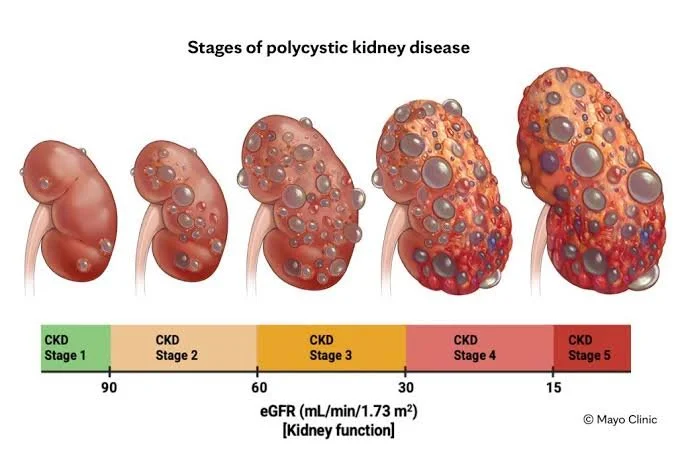
Polycystic Kidney Disease progresses across five stages. The erosion of kidney function typically occurs across decades, and for many people they can live a relatively normal day-to-day life during that time. However, eventually patients start to experience more serious symptoms. This typically occurs in stages 4 and 5, and patients often enter these stages anywhere from their 30s to their 50s. I, at 37 years old, am currently on the cusp of stage 4 to stage 5. Stage 5 is considered kidney failure, which ultimately results in death unless you get a kidney transplant or go on dialysis.
Signs and Symptoms
There are a wide variety of symptoms and complications caused by Polycystic Kidney Disease. Your kidneys are major organs, and serve many roles in our bodies’ various systems. Their principal job, however, is to filter toxins and waste out of your blood, and to combine that waste with water to produce urine, which we then expel from our body.
And we love that for us.
Your kidneys have other jobs too, in particular regulating certain minerals in your body (e.g. potassium, phosphorus, calcium), regulating water content in your body, and producing hormones that help stimulate red blood cell production and active Vitamin D for bone health.
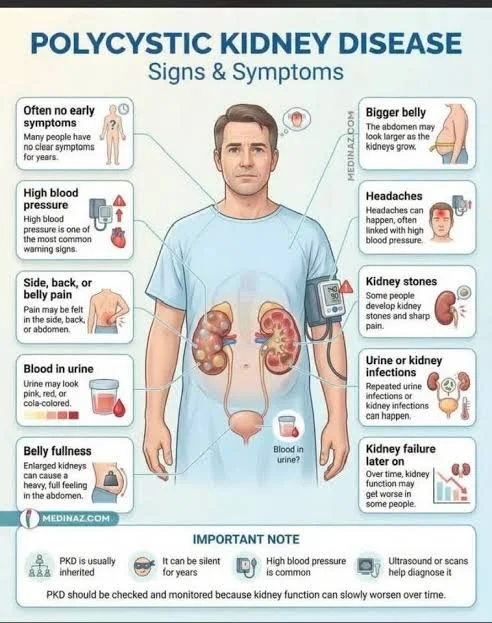
PKD progresses slowly over time, and at first most patients experience mild symptoms (typically high blood pressure), but as they advance in the disease patients tend to experience more serious symptoms. The various PKD symptoms include:
High blood pressure (this needs to be monitored and controlled medicinally starting from a young age because uncontrolled HBP increases kidney damage)
Enlarged kidneys (resulting in a large, distended belly)
Fun fact - healthy kidneys are the size of a closed fist, PKD kidneys can grow to 3-4 times that size. My kidneys are each a foot long and basically the size of footballs! And covered in cysts! Gross!
Inability to eat much (your kidneys get so big there’s not enough space for food in your stomach, so you end up eating less).
Regular headaches
Anemia
Kidney pain (persistent pain in the back, side, or belly)
Urine and kidney infections
Blood in the urine
Bleeding in the cysts (I get this a lot these days and let me tell you it hurts)
Cyst ruptures (I also get these frequently and let me tell you, they hurt more - like hospital-level hurt)
Kidney stones
The decline in kidney function also causes imbalances in your potassium, phosphorus, and calcium levels. Low calcium levels cause hyperparathyroidism, where your parathyroid glands release too much PTH, which can then cause osteoporosis, fatigue, weakness, and kidney stones.
High potassium levels affect the regular function of your heart, and can cause heart palpitations and, as the disease progresses, risk of cardiac arrest.
High phosphorus levels over time can cause an increased risk of heart disease, heart attack, stroke, and bone disease.
Lastly, PKD patients are at higher risk of developing aneurysms in their brain (in fact, my grandma who had PKD eventually died of a PKD-related aneurysm).
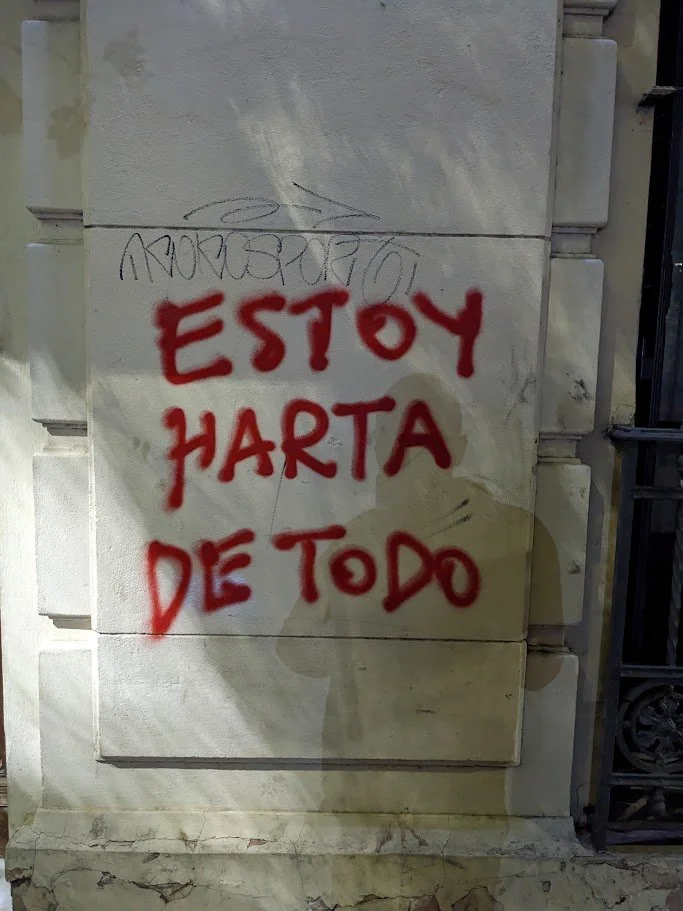
I took this somewhere in Argentina. And let me tell you, I was feeling SERIOUSLY harta de todo (i.e. fed up with everything).
So what’s going on with me?
I’m so glad you asked.
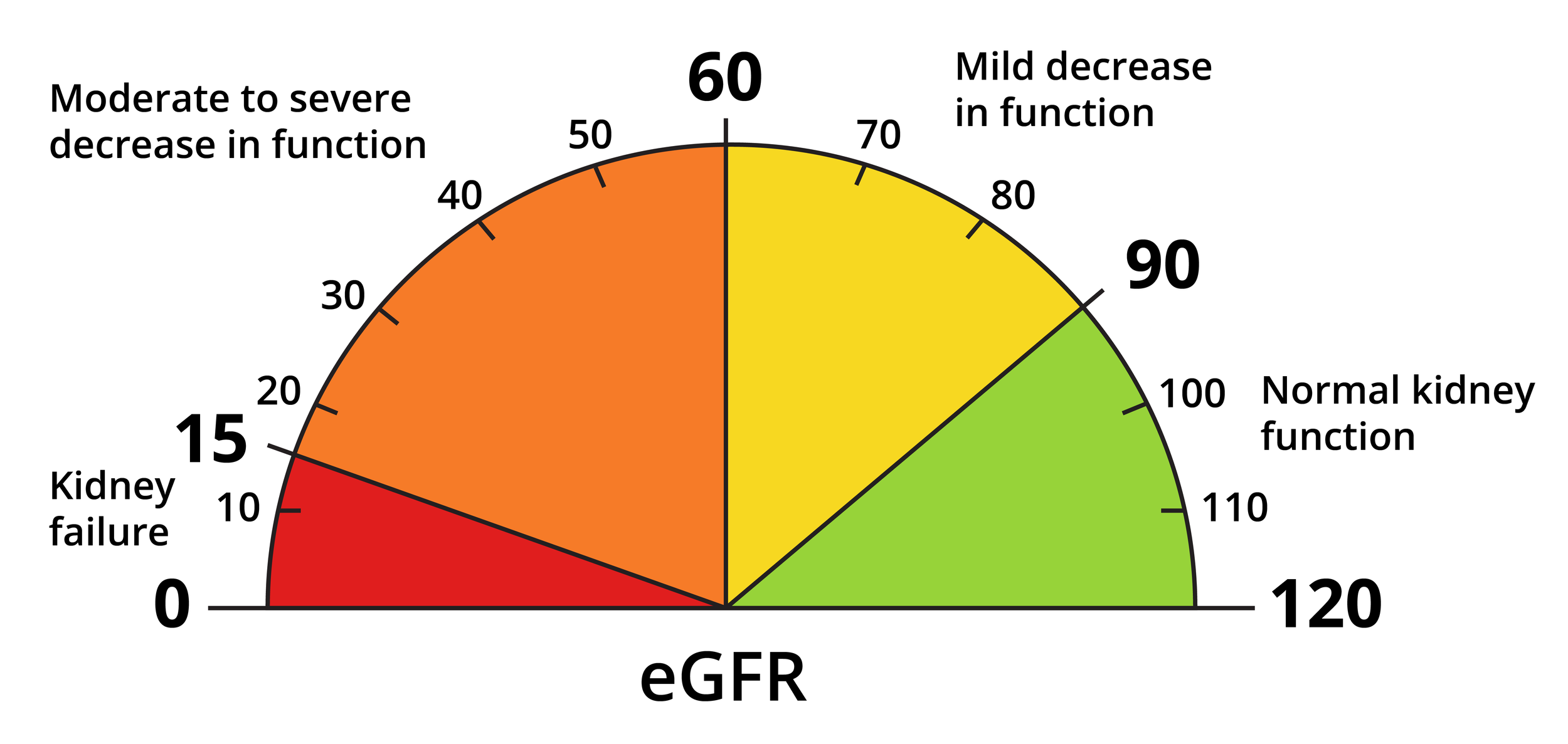
As I mentioned above, I am at the end of stage 4 and about to enter stage 5 PKD. One common way that kidney function is measured is through your Glomerular filtration rate (eGFR). This is a measure of how well your kidneys filter blood, and operates on a scale of 0 - 120. Normal kidney function exists in the 90-120 range. I get tested pretty frequently these days, and I am currently (as of November 2026) at 17 eGFR. So, by my accounting, that means I am operating at about 14% kidney function. Yikes!
Now, my kidney function has been declining for years (decades, really). In the past two years, however, my kidney function has declined at a faster rate than it was in my 20s and early 30s. In May 2024 I measured 32 eGFR, and in June 2022 I measured 39. Soon I will hit the 15 threshold and will technically enter into kidney failure territory.
Along with this acceleration of kidney decline, I’ve started to experience more of the symptoms listed above, and at a higher frequency. I have always managed high blood pressure, had enlarged kidneys / enlarged belly for someone my size, and got severe headaches when I was younger. More recently, I am dealing with almost daily kidney pain, regular cyst bleeds and cyst ruptures (which have occasionally put me in the ER, plus one particularly nasty one that I enjoyed in Mendoza, Argentina in 2024), cyst infection (which resulted in a hospitalization for sepsis in late 2025), high potassium (which has caused me heart palpitations and at one point recently put me at severe risk of cardiac arrest), severe anemia which will soon require IV iron treatments, and serious fatigue.
Moreover, with the track I’m on, it is likely that I will require kidney replacement therapy at some point in 2027, which means either dialysis or transplant. Dialysis is a treatment where a machine filters your blood, and it is extremely brutal on your body (akin to chemotherapy), and typically leads to poorer health outcomes for patients.
So, I am hoping to have a kidney transplant, which you can read more about on the next page!