Everything You Ever Wanted to Know About Being a Kidney Donor
You can literally save a life! How special is that?
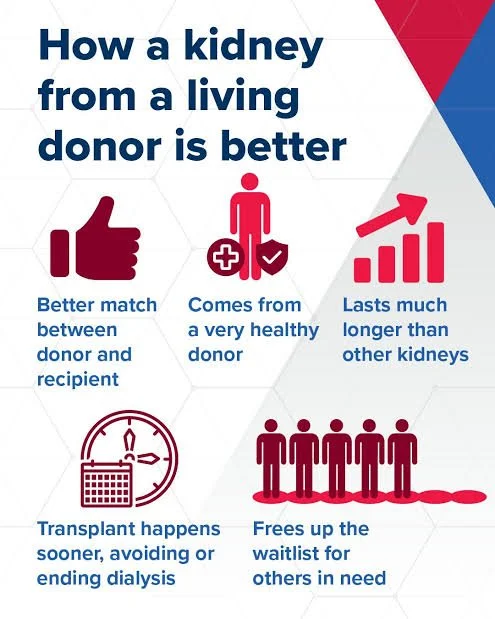
Living Kidney Donation (and organ donation in general) is one of the most powerful and needed medical treatments, both in the United States and the world. More than 90,000 people in the U.S. are waiting for a kidney transplant, and it can take 2-5 years for someone to receive a kidney from the deceased donor registry if they do not have a living donor. In that time, kidney patients endure life with a wide range of painful, unavoidable symptoms. Many rely on dialysis to live, a treatment with severe side effects that also requires patients to be hooked up to a machine at dialysis center for multiple hours, multiple times a week. Nearly 4,000 people each year die waiting for a kidney transplant.
All of that is avoidable through living kidney donation. It gives PKD patients the best possible health outcomes, and the best possible chance at a normal life. It allows patients to avoid the worst consequences and symptoms of kidney disease.
It also is an immense act of generosity and charity on the part of the donor, and the medical establishment recognizes this fact. The utmost care is taken by transplant centers and professionals to ensure the health, safety, and well-being of kidney donors. Likewise, kidney donation (and organ donation in general) is highly regulated in the United States to ensure the best, most healthy outcomes for donor and patient.
Facts About Being a Kidney Donor
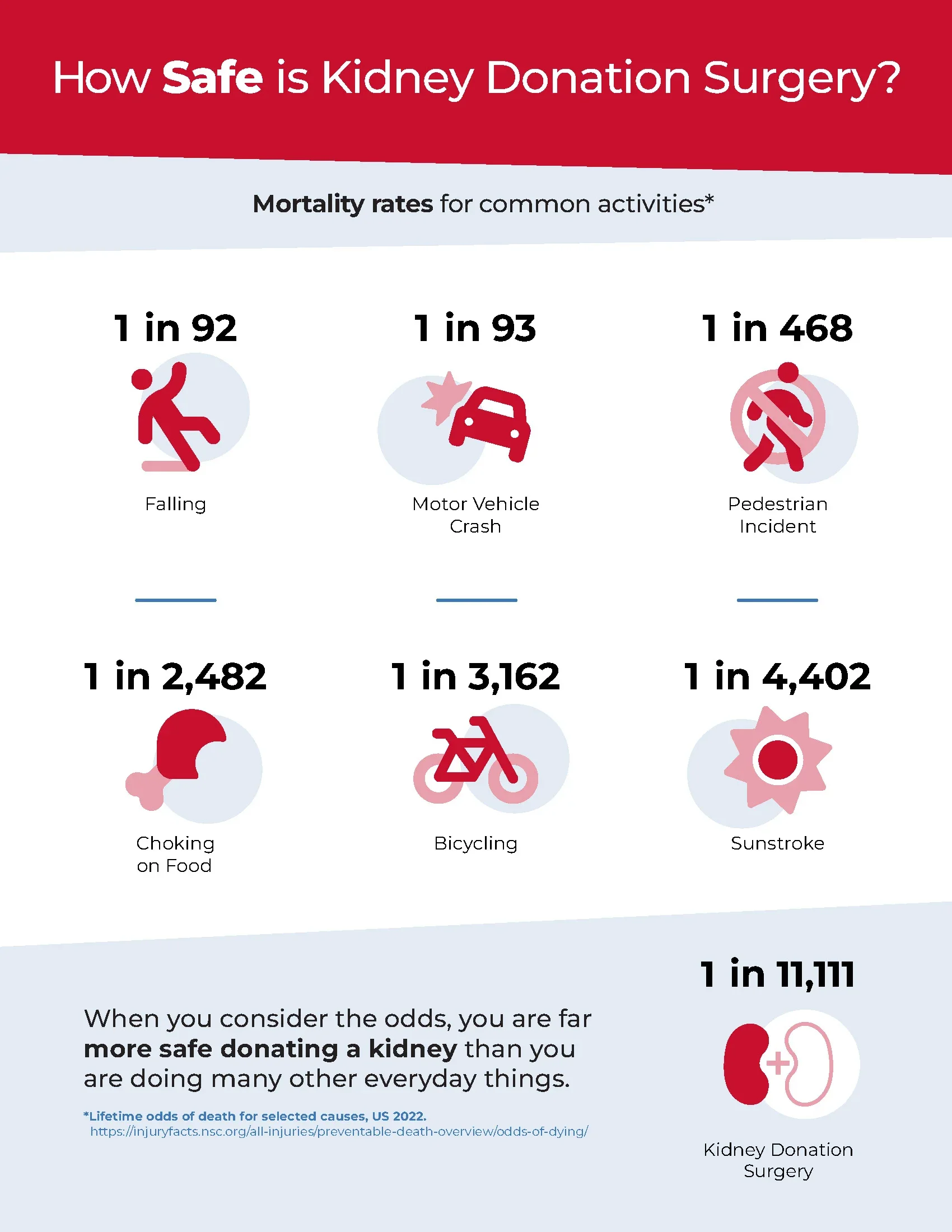
Living Kidney Donation is safe, simple, and life-changing. Advances in medical technology have made kidney transplant surgery minimally invasive, requiring shorter hospital stays and shorter overall recovery time for the donor. While there are risks to any surgery, studies have shown that over the long-term, donors do not experience deterioration in the function of their remaining kidney. In fact, your remaining kidney is able to compensate for the removal of the donated kidney without any major loss in overall kidney function.
Kidney donation is a minimally invasive surgery, which means that several small incisions are made, and the instruments used by the surgeon are placed through those incisions and used to remove your kidney (called a nephrectomy). This is known as a “laparoscopic” surgery because a camera is one of the instruments used by the surgeon. The small incisions allow you to recover faster with minimal scarring (my transplant center, NYP/Weill Cornell Medical Center, is one of the first centers to perform a “single-port” nephrectomy, where only one incision is required for the donor operation; this further reduces any potential scarring).
The surgery to remove your kidney generally takes 2 to 3 hours. You can expect to be up and walking within a few hours after surgery. You can also expect to be able to eat several hours after surgery (liquids first, then solid food). The usual hospital stay is 1 to 2 days after the surgery.
For donors, life doesn’t change much after donating. After recovering from surgery, donors are able to return to work, physical activity, and are able to eat a regular diet. Most donors can return to full normal activity and go back to work 2 to 4 weeks after their surgery (recovery for recipients typically takes longer). Female donors can also have successful pregnancies after donation and recovery.
What is the process for becoming a living kidney donor?
Becoming a living kidney donor is a multi-step process.
Step 1 - Registration
If you are interested in donating a kidney to someone, the first step is to connect with the patient’s transplant center (if you’re interested in altruistic kidney donation, with no particular recipient in mind, you can contact any transplant center). The transplant center will have you fill out a medical questionnaire and registration form. This questionnaire will cover your medical history and your contact information (all confidential).
Step 2 - Donor Medical Evaluation
Once registered, the transplant center will arrange an initial medical evaluation. You will meet with your donor nurse coordinator, who is one of your advocates during the donor process. Your initial medical evaluation will involve having your blood drawn to evaluate your blood type, antigen profile, and crossmatch parameters. This initial evaluation will determine if you are a good biological match to donate to the specific recipient.
Note - once you receive the results of these tests from the transplant center, it is your responsibility to tell your potential recipient the results if and when you choose. I will elaborate more on this below, but the Donor Advocate Team prioritizes the confidentiality and best interests of the donor, not the recipient, and they will not reveal your compatibility information to your recipient. If you are compatible and decide to move forward, you may contact the transplant center to arrange to come in for additional medical evaluation to ensure that you and your kidneys are healthy enough for donation.
Step 3 - Additional Medical Testing
This additional testing has been referred to me as “the best physical you will ever receive in your life.” They will conduct some additional blood tests, as well as a urine sample. You will also do some more involved tests including an electrocardiogram (electrical tracing of heart activity), chest x-ray to make sure your lungs are healthy, and a CT scan with 3D reconstruction to create a detailed anatomical road map of your kidneys for the donor surgeon.
Depending on your age, gender, and health history, you may be asked to undergo additional tests (such as a stress test, if you have a history of high blood pressure).
Important Financial Note
The cost of all this medical testing is covered through a combination of the National Kidney Registry, the recipient’s health insurance (in my case, my health insurance), and the transplant center. The initial blood work can be covered by the National Kidney Registry, and the additional testing is covered either by my insurance or by the transplant center.
The kidney donation surgery itself is 100% covered by my health insurance.

Additional Rights and Privileges - Donor Shield
It is illegal to give or receive financial compensation for a donated kidney. However, by donating through the National Kidney Registry (and at an NKR member center, such as my transplant center), kidney donors qualify for several benefits through the Kidney Donor Shield Program. Those benefits include:
Lost wages reimbursement (note - organ donation is also covered by paid leave laws in Maine and New York)
Donor expense reimbursement (e.g. travel and lodging costs)
Pet care reimbursement
Kidney prioritization (in the rare event that you should ever need a kidney donation in the future - you go to the top of the list automatically and are first priority)
Voucher donation
Remote donation
Donor mentorship
Legal support
Complication protection
Home blood draws and local medical testing (if you don’t live in the same region as my transplant center)
Best match to maximize the impact of your donation
Life insurance support
These benefits are available to donors regardless if they do directed donation, family voucher, standard voucher, or paired exchange donation.
Rights and Privileges of a Kidney Donor
Independent Donor Advocate Team
As you move through the living donor evaluation process, the transplant center’s priority is to keep your best interests in mind. You will meet with an Independent Donor Advocate (IDA) team, who will assist you through the donation process. This team is separate from the potential transplant recipient’s medical team, and is a means of both advocating for the best interests of the donor as well as avoiding any conflict of interest between the donor and recipient. The IDA’s responsibilities include, but are not limited to:
Promoting the best interests of the potential donor
Advocating for the rights of the potential donor
Assisting the potential donor in getting and understanding information regarding the:
Consent process
Evaluation process
Surgical procedure
Medical and psychosocial risks
Importance of post-donation follow-up
You will meet your Donor Advocate Team when you conduct your initial blood work. The team will consist of a donor nurse coordinator (who will be your principal advocate during the donation process), the donor physician, a social worker, a living donor advocate, and financial specialist, and a psychiatrist. The purpose of this team is to ensure your physical and mental health and well-being throughout the process.
Informed Consent
During your evaluation, your team will take you through the informed consent process, which should help you understand all aspects of the donation process, including the risks and benefits. Your consent to be a donor is completely voluntary. You should never feel pressured to be a donor, and you have the right to delay or stop the donation process at any time. The reasons behind your decision will be kept confidential. Talk in detail with your family members and close friends. Talk to other living donors (they can connect you with others who have donated through their program).
Final Questions and Additional Resources
My Transplant Centers
I have currently completed transplant evaluation and have been listed at two transplant centers: New York Presbyterian / Weill Cornell Medical Center in New York City, and Tufts Medical Center in Boston. Both are highly regarded centers that conduct numerous successful kidney transplants every year.
By “been listed” I mean that I am currently on their list for deceased kidney donation. Transplant patients typically register at multiple centers in multiple regions of the country to increase their chance of accessing a deceased donation more quickly. Living donation, however, avoids the necessity of waiting for a deceased donor. In all transparency, if I am lucky enough to receive a living kidney donation, my top priority is to have that done at NYP/Weill Cornell Medical Center.
Why? Well, first of all, Weill Cornell is one of the national leaders in both number and quality of kidney donations. They conduct more transplants than almost any other hospital in the United States, and additionally are a leader in conducting transplant and nephrectomy surgeries at the same time (nephrectomy is where they also remove the diseased kidneys from the recipient). They are nationally recognized as a successful transplant center with overwhelmingly positive patient outcomes, for donor and recipient.
Lastly, Weill Cornell is where my mom’s kidney transplant took place in 2013, and where my stepdad donated his kidney to her. I was there to witness the high quality work at Weill Cornell, and I have also witnessed how healthy and successful both my mom and stepdad’s lives have been since their surgeries. I am lucky that Weill Cornell (and Tufts) have both accepted me as a transplant patient.
Additional Resources
If you are interested in reading or learning more, I can point you in the direction of the following resources:
New York Presbyterian / Weill Cornell Medical Center - Information for Potential Kidney Donors: What You Need to Know about Becoming a Kidney Donor, Living Donor Kidney Center
National Kidney Registry - Become a Living Kidney Donor, What it Takes to Qualify as a Kidney Donor, Why Donate a Kidney Through the NKR?, Does it Cost Anything to Get Tested as a Living Kidney Donor?
National Kidney Foundation - Becoming a Living Donor, What to Expect After Donation, Long-Term Risks of Living Donation
American Medical Association - What doctors want patients to know about becoming a living kidney donor