Everything You Ever Wanted to Know About Living Kidney Donation
It’s a big deal.
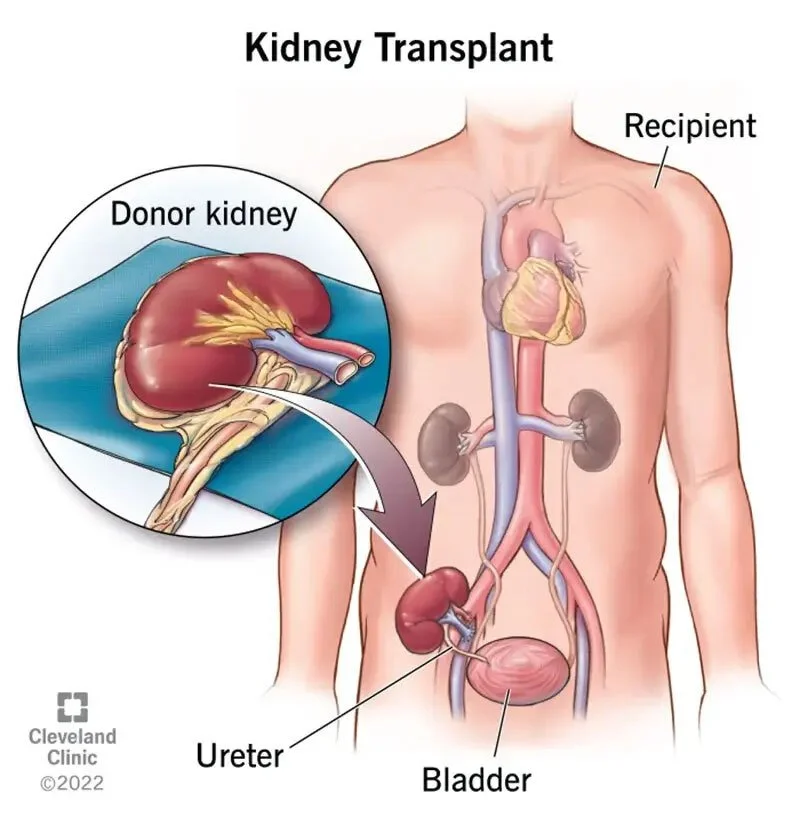
As I mentioned in my story, kidney transplant is as close to a cure as possible for Polycystic Kidney Disease. There are two types of kidney donation: deceased donation and living donation. Deceased donation is where the kidney of an individual who has passed away is transplanted into a recipient. While it is an incredible treatment, it does come with drawbacks: it is unplanned, it can often take days if not weeks or months for the kidney to start functioning in the recipient, and patient outcomes are, on average, not as good as with living kidney donation.
Living Donation
Living donation is when a living person decides to donate a kidney to someone who needs a transplant. 6,000 organ transplants a year are made possible by living donors. The kidney is the most commonly transplanted organ from a living donor.
Positive aspects of living donation:
A living donation makes it possible to schedule the transplant surgery at a time that is optimal for both you and your donor.
Better genetic matches between you and your donor decrease the risk of organ rejection.
Kidneys from living donors usually work immediately, as the kidney is removed from a healthy donor and transplanted right away.
A living donor transplant may reduce or eliminate your time on dialysis and/or years of waiting for a deceased donor organ.
Studies show that patients who receive a living kidney donation live longer lives than those who receive a deceased donation (where a kidney is transplanted from someone who has passed away) and significantly longer lives than those treated with dialysis.
Types of Living Kidney Donation
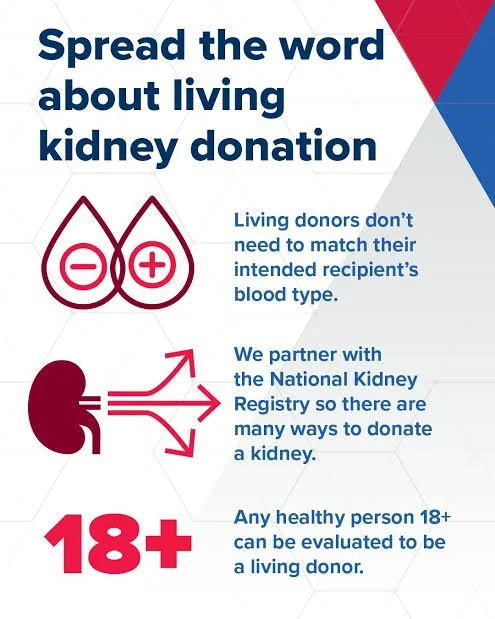
In recent decades, there have been significant advances in living kidney donation. When most people think of kidney donation, they think of someone donating a kidney to someone they know. That’s called Directed Donation. But to be a kidney donor, you have to be a biological match. Now, while there are a lot of metrics that determine whether someone is a biological match, it is often less restricted than people think (for example, not having the same blood type doesn’t have to be a dealbreaker!). However, the biological match requirement does limit the potential pool of donors for a person.
For that reason, the kidney donation world has expanded who and how people can donate. The types of living kidney donation are:
Directed Donation
Paired Kidney Donation
Paired Kidney Donation Chains
Voucher Kidney Donation
Directed Donation
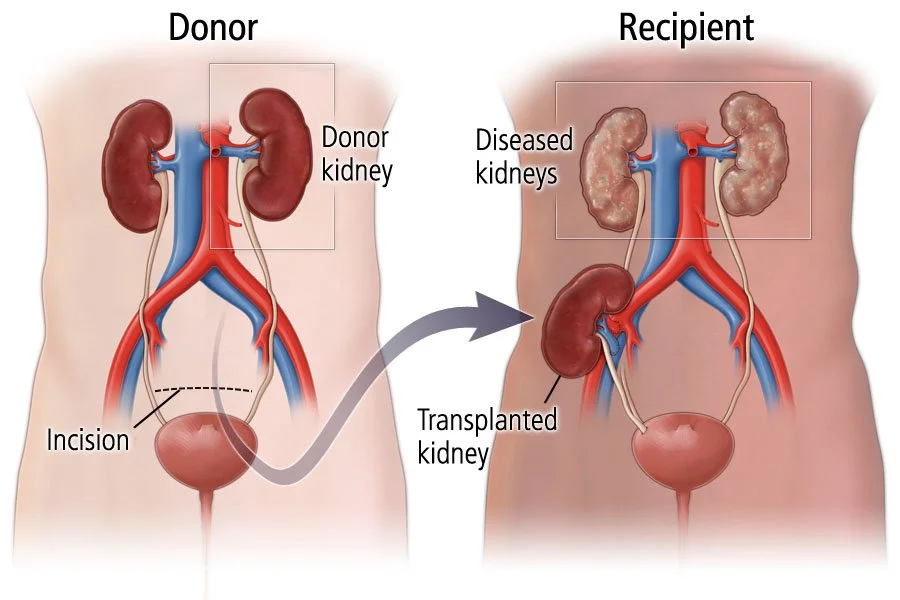
Directed donation is the most common type of living donation. In a directed donation, the donor names the specific person to receive the transplant.
The donor may be:
Related: your biological relative, such as a parent, brother, sister or adult child
Non-related: a biologically unrelated person who has a personal or social connection with you, such as a spouse or significant other, a friend or a coworker
In directed donation, the donor has to be a biological match of the recipient. Whether someone is a match is determined by the recipient’s transplant center though thorough medical testing of the donor. It’s been called the best physical you’ll ever have in your life! Once a donor is established as a match, the center schedules the transplant surgery at the time and date that best works for the center, the donor, and the recipient.
Kidney Paired Donation
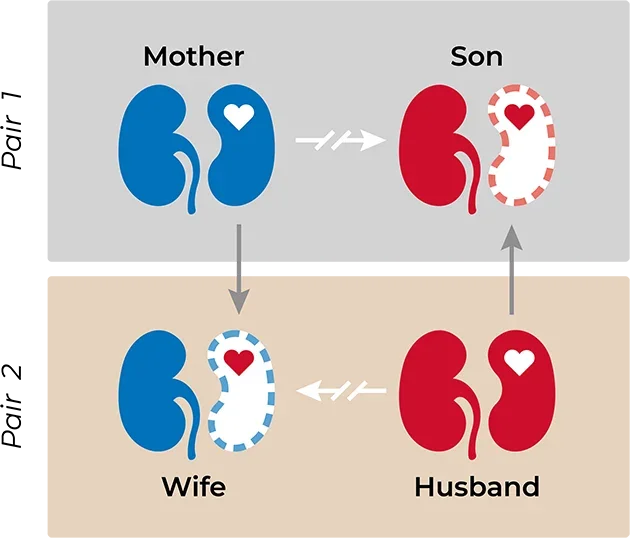
In kidney paired donation (KPD), a donor will donate their kidney to another recipient in exchange for a compatible kidney for their friend or family member.
KPD was originally created to overcome donor-recipient incompatibility; however, compatible pairs often participate in KPD to find a donor who is a better match to their paired recipient. A better match usually means the transplanted kidney will last longer and the recipient will require less immunosuppressive medication.
How Kidney Paired Donation Works
When a person (Recipient A) is in need of a kidney and has a willing donor (Donor A), but Donor A is either a poor match to Recipient A or not a match at all, the National Kidney Registry (NKR) can find a recipient who is in need of a kidney (Recipient B) and has a donor (Donor B) who is willing to donate, but is either a poor match or not a match at all to Recipient B, but is a match to Recipient A and, have them swap.
In traditional KPD, Donor A is a match and gives to Recipient B and Donor B is a match and gives to Recipient A. This is a “swap.” In the example to the right, the first pair, a mother and her son, are incompatible. The second pair, a husband and his wife, are also incompatible. In this exchange, the mother donates to the wife of the second pair and the husband donates to the son in the first pair; this is called a loop.
Paired Kidney Donation Chains
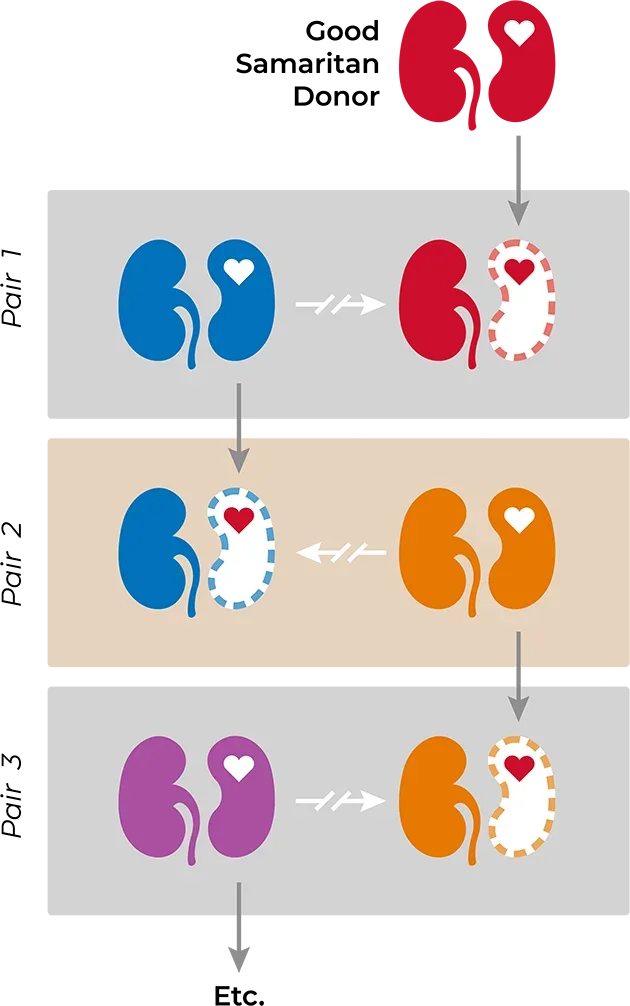
In a chain, a donor will donate to someone in need of a kidney who has someone willing to donate on their behalf but is incompatible or is a poor match. The chain can be initiated by someone who donates on behalf of a friend or family member that they unfortunately are not a match for, or it can be initiated by a Good Samaritan who altruistically donates their kidney with no intended recipient in mind. The donor will donate to someone who has a donor who isn’t a match, and then that paired donor will donate to someone else in need of a kidney who has a donor willing to donate on their behalf, and so on and so forth as exemplified in the diagram to the right.
One chain can facilitate anywhere from two to 30 transplants. There is theoretically no limit to the chain reaction when the right conditions are met. Historically, donors that started chains were simply non-directed donors, however, with the innovation of the Family Voucher Program, donors that start chains are much more likely to be family voucher donors.
Voucher Kidney Donation
Voucher kidney donation is a program offered by the National Kidney Registry, a service and advocacy organization that facilitates living kidney donations nationwide. This is another example where a donor who is not a biological match for a recipient can still donate their kidney on their behalf. In the voucher program, a donor makes a kidney donation on their own schedule, and in doing so provides a voucher for a friend or family who needs a kidney donation.
The voucher can be redeemed when the friend or family member is ready for transplant surgery. In addition to the voucher holder in imminent need, the donor can also name up to five family members as backup voucher holders should the voucher holder in imminent need end up not redeeming the voucher.
When the voucher is redeemed, the voucher holder will be prioritized for a living donor kidney through the National Kidney Registry (NKR). The NKR’s Kidney for Life initiative, which utilizes the latest generation in DNA sequencing technology to assess the histologic, or eplet, mismatch between patients and donors, increases the odds of a better match for the person you are trying to help (unless they have a six-antigen match sibling donor) which usually means the transplanted kidney will last longer and the recipient will require less immune-suppressive medication.
Despite facilitating transplants for more difficult cases, NKR transplants have better outcomes compared to the typical living donor transplant in the United States.
Finally, by donating through the Standard Voucher Program, donors are able to help more than one person in need of a transplant—the person who receives the voucher and the other person or people transplanted due to their kidney donation.